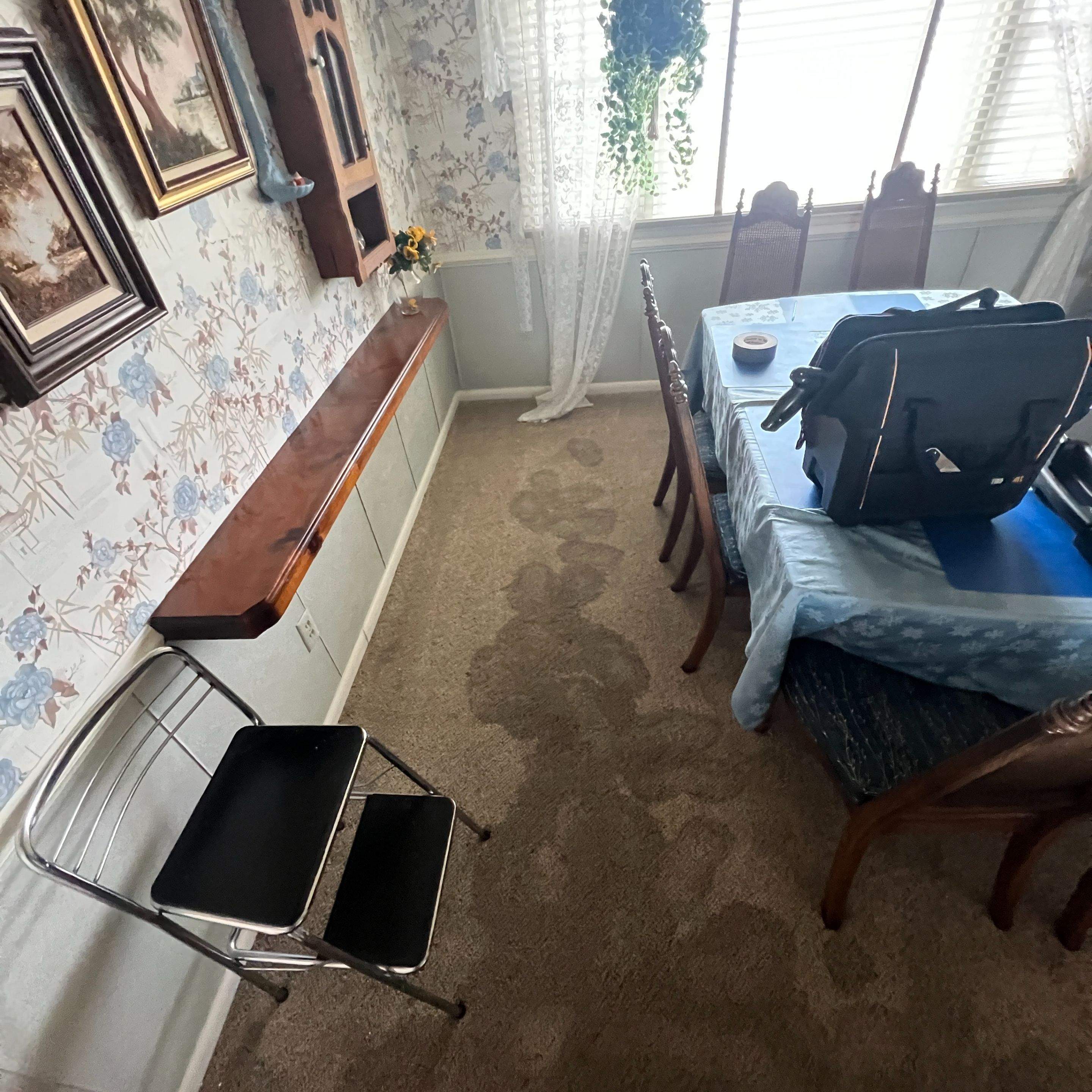
The Westfield Bay Window That Hid a Year of Damage
One Westfield homeowner called us after a March thunderstorm pushed sideways rain into a bay window above his kitchen sink. He saw a single drip and assumed the caulk had finally given up. When our technician scanned the wall with a thermal camera, the cold signature spread almost six feet wide and dropped behind the cabinets. We pulled the toe kick and found blackened insulation, rotted shoe molding, and a sill plate so saturated it read 38 percent on the moisture meter. Dry wood reads around 12.
That leak had been happening every storm for at least a year. The bay window flashing had been installed without a proper kickout, so water dumped behind the siding and rode the framing down. Total mitigation came to roughly $4,800, and because we documented the storm event and the sudden discovery, his insurance covered the bulk of it after a $1,000 deductible. If you suspect anything similar, our write-up on hidden leak detection behind walls walks through the same diagnostic process we used on his kitchen.
What made his case typical, not unusual, is the lag between the original flashing defect and the visible symptom. We see this on roughly one in four bay and bow window calls in North Vernon. The geometry of these windows creates multiple flashing transitions, and any one of them can fail silently for months before a hard wind-driven rain finally overwhelms the path of least resistance. By the time a homeowner sees the drip, the framing damage is usually already done.
The Carmel Rental With Three Leaking Windows at Once
A landlord in Carmel got a 2 AM text from his tenant during a derecho. Three second-floor bedroom windows were leaking simultaneously. He drove over, found puddles on two windowsills and one ceiling stain forming in the living room below. He called us at 3:15 AM, and our on-call crew was extracting water with a portable unit by 4:00 AM.
Here is what we found once daylight hit:
- Two windows had failed exterior caulking that had cracked but looked fine from ground level
- One window had a clogged weep hole, which forced rainwater to back up and overflow the interior sill
- The ceiling stain came from a fourth, undisclosed leak around an attic gable vent, which is why we always inspect the full envelope on storm calls
Drying that job took four days with six air movers and two dehumidifiers running continuously. We monitored moisture readings twice a day. The landlord asked the question every property owner asks at some point, which is whether it was worth paying a professional rather than running box fans from Lowe's. The honest answer is that box fans move air but do not pull humidity out of the cavity, and trapped moisture behind drywall is exactly how mold colonies start within 48 to 72 hours.
He also asked us to write a maintenance recommendation for his other rental properties. We suggested an annual fall inspection of all exterior caulk lines, a quick weep hole check each spring, and a thermal scan after any storm with sustained winds above 50 mph. He has not called us back for an emergency since, which is the outcome we actually prefer.
One Last Story From Zionsville
A Zionsville homeowner called us last spring after a hailstorm cracked the exterior trim on a picture window. She took photos within an hour, called her agent that afternoon, and called us the next morning. We were drying the cavity by noon. Her total out of pocket was the deductible, the framing never reached saturation, and the room was back in service in five days. Same storm, same window type as the Fishers job. The only variable was how fast she moved.
The Cost Range You Should Expect
Across the North Vernon jobs we ran last year, single-window storm intrusion calls ran between $1,400 and $3,200 when caught within 24 hours. Multi-window or delayed-response jobs ran $4,500 to $9,000 depending on how much drywall, insulation, and flooring had to come out. Mold remediation, if it became necessary, added $1,500 to $4,000 on top. Insurance typically covers sudden storm events. It does not cover gradual leaks the carrier can argue you should have noticed, which is why fast documentation matters more than most homeowners realize.
The Fishers Family Who Waited Three Days
Not every story ends cleanly. A Fishers family called us on a Tuesday after a Saturday storm. They had wiped up what they could see and figured the window leak had resolved. By Tuesday, the drywall under the window was spongy, the paint was bubbling, and there was a musty smell in the room. Moisture meter readings on the bottom plate were still above 30 percent. We had to remove 18 inches of drywall around the window, treat the framing with an antimicrobial, and bring in larger equipment because the gypsum had wicked moisture three feet up the wall.
That delay turned a roughly $2,200 job into a $5,600 job, and the homeowner's deductible was the same either way. If you ever face the same decision, our breakdown of complete restoration cost factors explains why the first 48 hours drive almost every price variable in this industry.
What We Actually Do When You Call
When you call North Vernon Water Restoration during or after a storm, the first thing we do is ask whether the water is still actively entering. If it is, we talk you through emergency tarping or interior containment before we even leave the shop. Once on site, our IICRC certified technicians do four things in order. We stop the intrusion, usually with temporary exterior sealing or window film. We extract any standing water. We map the moisture migration with thermal imaging and pin meters so we know exactly how far it traveled. Then we set up containment and drying equipment sized to the actual cavity volume, not a generic room count.
For storm-related window failures, we also document everything for your insurance carrier. Photos of the failed component, moisture readings, equipment logs, and a written scope of work. Most North Vernon adjusters we work with want this exact package, and missing pieces are the number one reason claims get delayed or partially denied. Because window intrusion almost always overlaps with broader weather events, you may also want to skim our storm damage restoration services page to understand what gets covered under a wind-and-hail claim versus a maintenance exclusion.