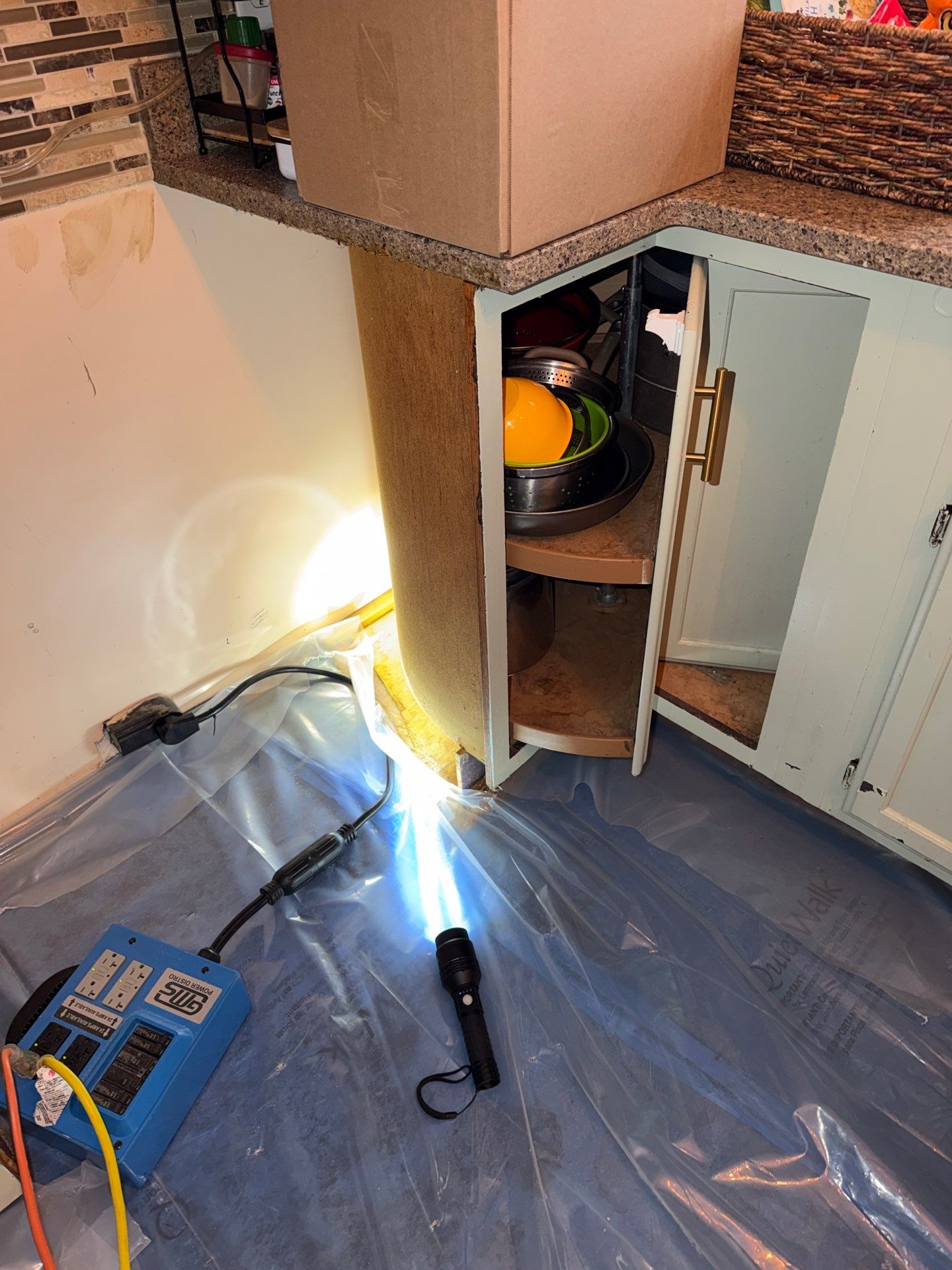
Step 1: Identify the Water Source and Cause
- Locate the active leak or intrusion point within the first 5 minutes.
- Shut off the main water valve if the source is plumbing. The valve is typically near the water meter or where the main line enters the foundation.
- Note the cause in writing: burst pipe, appliance failure, roof leak, sewer backup, or groundwater intrusion.
- Record the exact time the damage was discovered. Insurance carriers require this on the First Notice of Loss.
- Photograph the shutoff valve in the closed position. This documents your effort to mitigate.
- If the source is an appliance, unplug it and photograph the serial number plate before moving the unit.
Cause determines coverage. Sudden and accidental events are typically covered. Gradual leaks over 14 days or more are typically excluded.
Step 2: Determine the IICRC Water Category
- Category 1: clean water from supply lines, faucets, or rainwater. Standard policy coverage applies.
- Category 2: grey water containing detergents, urine, or discharge from washing machines and dishwashers. Coverage usually applies but timelines tighten.
- Category 3: black water from sewage, toilet overflows past the trap, or flood water. Requires a sewer backup rider for coverage. Review our Category 3 emergency cleanup process if this matches your situation.
- Category degradation: Category 1 water becomes Category 2 after 48 hours, and Category 2 becomes Category 3 after 72 hours. Document timing precisely.
Step 5: Document Before Mitigation Begins
- Photograph every affected room with a wide shot, a mid shot, and close-ups of damaged materials.
- Record a 60 to 90 second video walkthrough narrating what you see.
- Photograph the water source itself, including any failed component such as a hose, supply line, or pipe section.
- Save the failed part in a sealed bag. Adjusters frequently request physical evidence.
- List damaged contents with brand, model, age, and replacement value.
- Capture serial numbers and receipts when available. High-value items (electronics, appliances over $500) require this for full RCV recovery.
- Note ceiling stains, baseboard swelling, and floor cupping with measurements (length in feet, depth of saturation).
Step 6: File the First Notice of Loss
- Call your carrier within 24 hours of discovery.
- Provide policy number, cause, time discovered, and current condition.
- Request a claim number and adjuster contact in writing.
- Ask whether emergency mitigation requires preauthorization. Most policies do not, but confirm in writing.
- Confirm your deductible amount and whether it applies per claim or per occurrence.
- Ask if the carrier uses a preferred vendor program. You are not required to use it. You may select North Vernon Water Restoration or any licensed mitigation contractor.
Step 7: Begin Mitigation Within 24 to 48 Hours
Carriers require prompt mitigation under the Duty to Mitigate clause. Delay can reduce your payout. North Vernon Water Restoration arrives in North Vernon typically within 60 to 90 minutes of your call. Our scope includes:
- Water extraction with truck-mounted units pulling 100 to 200 gallons per hour.
- Moisture mapping using thermal imaging and pin meters, recorded daily.
- Structural drying with air movers (one per 150 square feet) and dehumidifiers sized to the affected cubic footage.
- Antimicrobial application on Category 2 and 3 losses.
- Controlled demolition of unsalvageable drywall (cut 2 inches above the waterline), insulation, and baseboard.
- Content pack-out for items requiring offsite cleaning or storage, logged on a chain-of-custody inventory.
- Daily psychrometric logs submitted directly to your adjuster.
Our emergency drying protocol matches the documentation standards carriers require for full reimbursement. Typical drying time runs 3 to 5 days for Category 1 losses and 5 to 7 days for Category 2 or 3 losses.
Common Coverage Scenarios in North Vernon
- Burst supply line under a sink: covered. Average claim $3,000 to $8,000.
- Water heater tank failure: covered. Average claim $5,000 to $15,000.
- Roof leak from wind-damaged shingles: covered under wind peril. Average claim $4,000 to $12,000.
- Slow toilet supply leak over 6 months: typically denied as maintenance.
- Sump pump failure during storm: covered only with Water Backup Endorsement.
- Foundation seepage during heavy rain: typically excluded.
For burst pipe specifics, our burst pipe response guide covers the exact mitigation values adjusters expect.
Step 10: Complete Repairs and Close the Claim
- Approve the final scope in writing.
- Confirm pass/fail moisture readings before reconstruction begins (wood under 16 percent, drywall under 1 percent on a scale meter).
- Submit final invoices and lien waivers to the carrier.
- Request release of recoverable depreciation within 30 days of completion.
- Retain all documentation for a minimum of 5 years in case of a reopened claim or future coverage dispute.
Step 4: Confirm What Is Excluded
- Flood from rising surface water, rivers, or storm surge. This requires separate NFIP flood insurance.
- Gradual leaks, slow drips, or maintenance neglect.
- Damage from unresolved repairs the carrier previously flagged.
- Mold growth beyond a $5,000 to $10,000 sublimit unless caused by a covered event.
- Damage to detached structures unless Coverage B is in force.
- Seepage through foundation walls from saturated soil.
- Wear and tear to plumbing components older than 25 years on some policies.
Step 8: Coordinate With the Adjuster
- Schedule the adjuster inspection within 3 to 7 days of the loss.
- Provide our IICRC scope of work and moisture readings before the visit.
- Walk the property with the adjuster present. Point out hidden damage behind walls, under flooring, and inside cabinetry.
- Request a written estimate within 10 business days.
- Compare the carrier estimate against our scope. Discrepancies are common and negotiable.
- If the gap exceeds 15 percent, request a re-inspection or invoke the appraisal clause in your policy.
Step 9: Review the Settlement Offer
- Actual Cash Value (ACV): initial payment minus depreciation and deductible.
- Replacement Cost Value (RCV): full repair cost, released after work is completed and invoiced.
- Recoverable depreciation: the gap between ACV and RCV, paid on completion.
- Supplemental claims: filed when hidden damage is discovered during repairs. Common in 30 to 40 percent of water losses.
- Overhead and profit (O and P): typically 10 percent and 10 percent on losses requiring 3 or more trades. Request this explicitly.
Step 3: Verify What Your Policy Includes
Pull your declarations page and locate these line items:
- Dwelling Coverage (Coverage A): repairs to the structure, typically $200,000 to $500,000 in North Vernon.
- Personal Property (Coverage C): contents, usually 50 to 70 percent of Coverage A.
- Loss of Use (Coverage D): hotel and meals during displacement, often 20 percent of Coverage A.
- Water Backup Endorsement: required for sewer and sump pump failures. Limits range from $5,000 to $25,000.
- Service Line Coverage: covers underground supply and sewer lines from the street to the home. Limits range from $10,000 to $20,000.
- Ordinance or Law Coverage (Coverage D on some forms): pays for code upgrades triggered by repairs, often 10 percent of Coverage A.
- Deductible: typically $1,000 to $2,500 per claim.